The Cycle
The workflow we use end-to-end. Not “agile vibes” - an actual, repeatable loop that keeps research, decisions, and learning connected.

One system for the whole experimentation workflow. Research, hypotheses, experiments, decisions. Have a look around.
No credit card. No “book a demo to see a price”. Just have a go.
Signature features
The three things we've actually named.
The workflow we use end-to-end. Not “agile vibes” - an actual, repeatable loop that keeps research, decisions, and learning connected.
Follow-ups linked so you can see how a programme evolves.
Conservative annualisation with transparent factors. Clarity without the nonsense.
The Cycle
The Cycle keeps research, decisions, and learning connected.
Honest stats, not victory laps
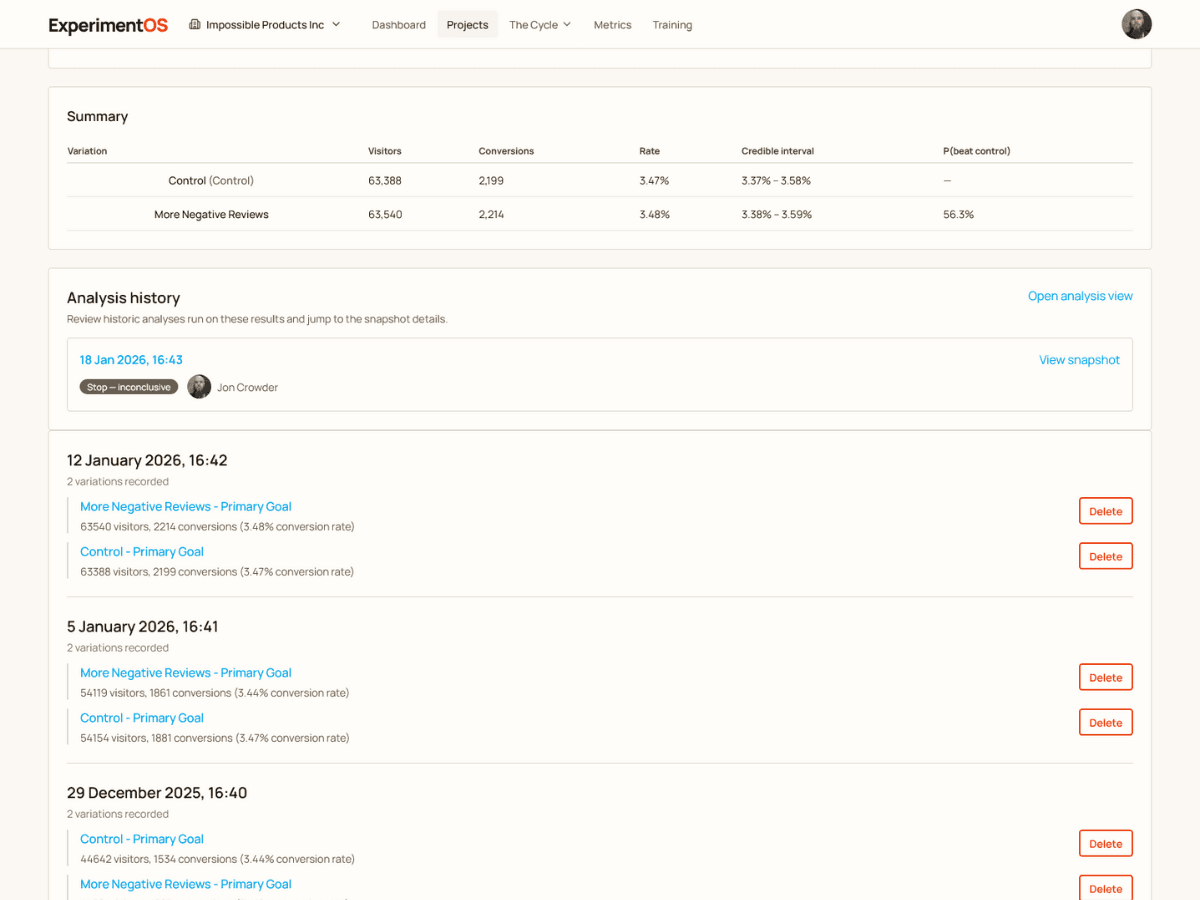
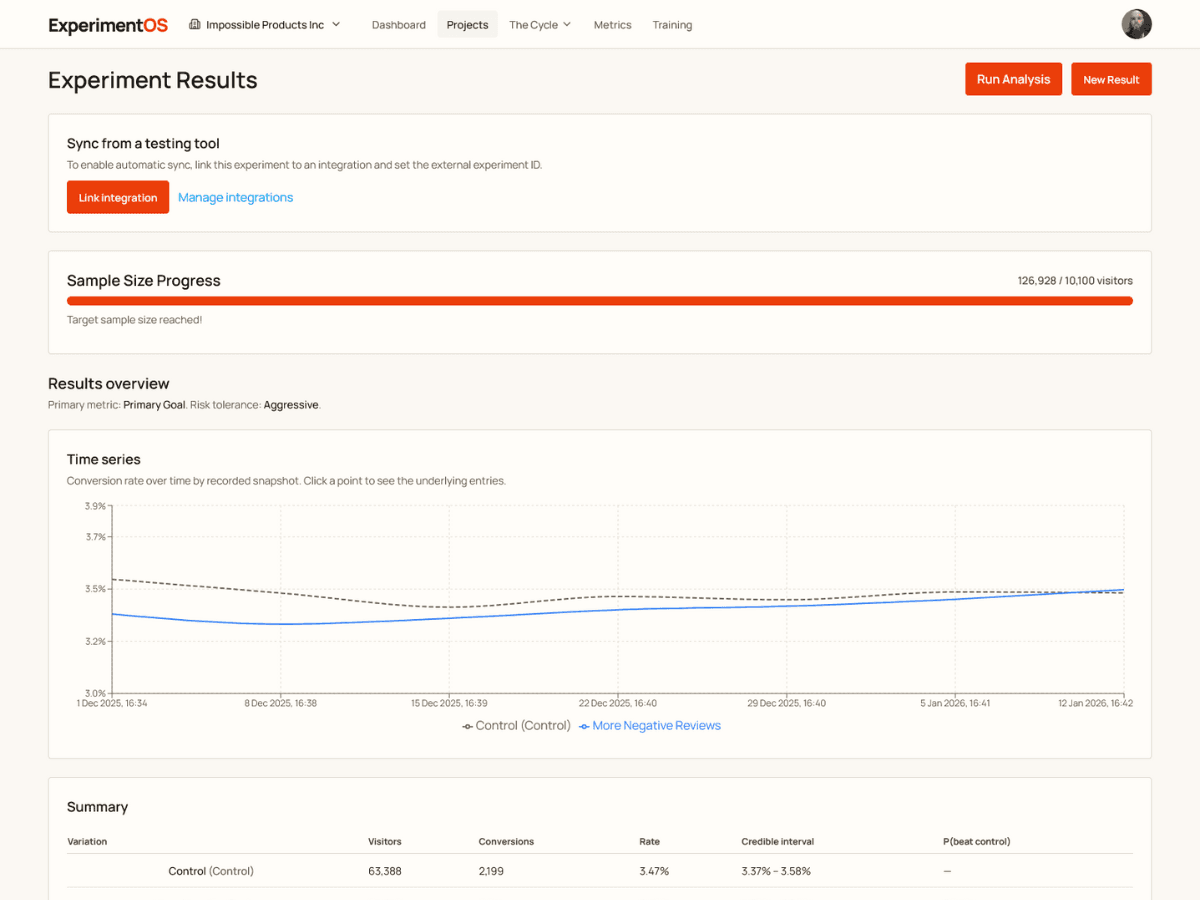
Bayesian outputs with uncertainty shown. Less “we peaked at day 3”, more “we can defend this”.
Decisions don’t vanish into Slack
Capture what you shipped (or didn’t), why, and what you learned - so the next test isn’t guesswork.
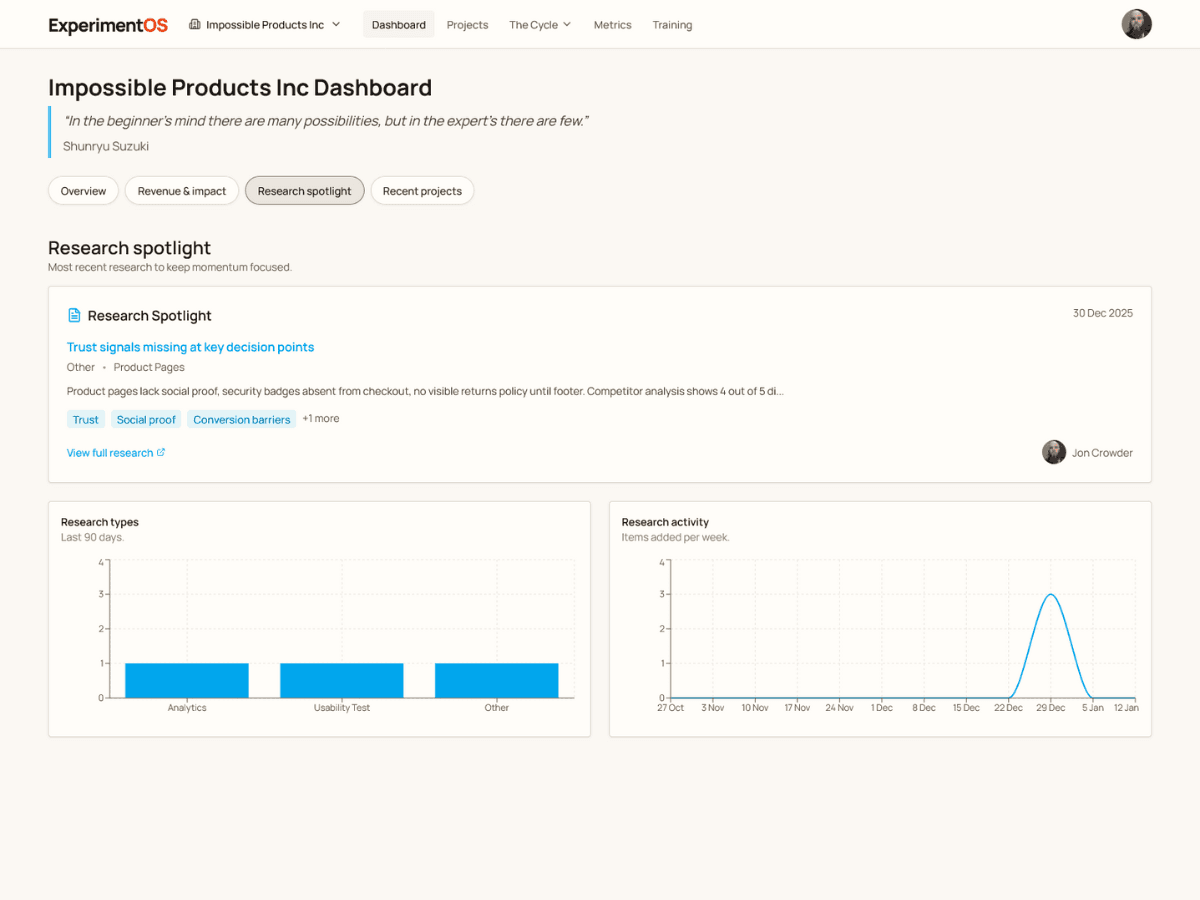
Heatmaps in one tool. Session recordings in another. Survey results in a spreadsheet someone made in 2019. User interview notes in... actually, where are those? We give you one place for all of it, linked to the hypotheses it supports.
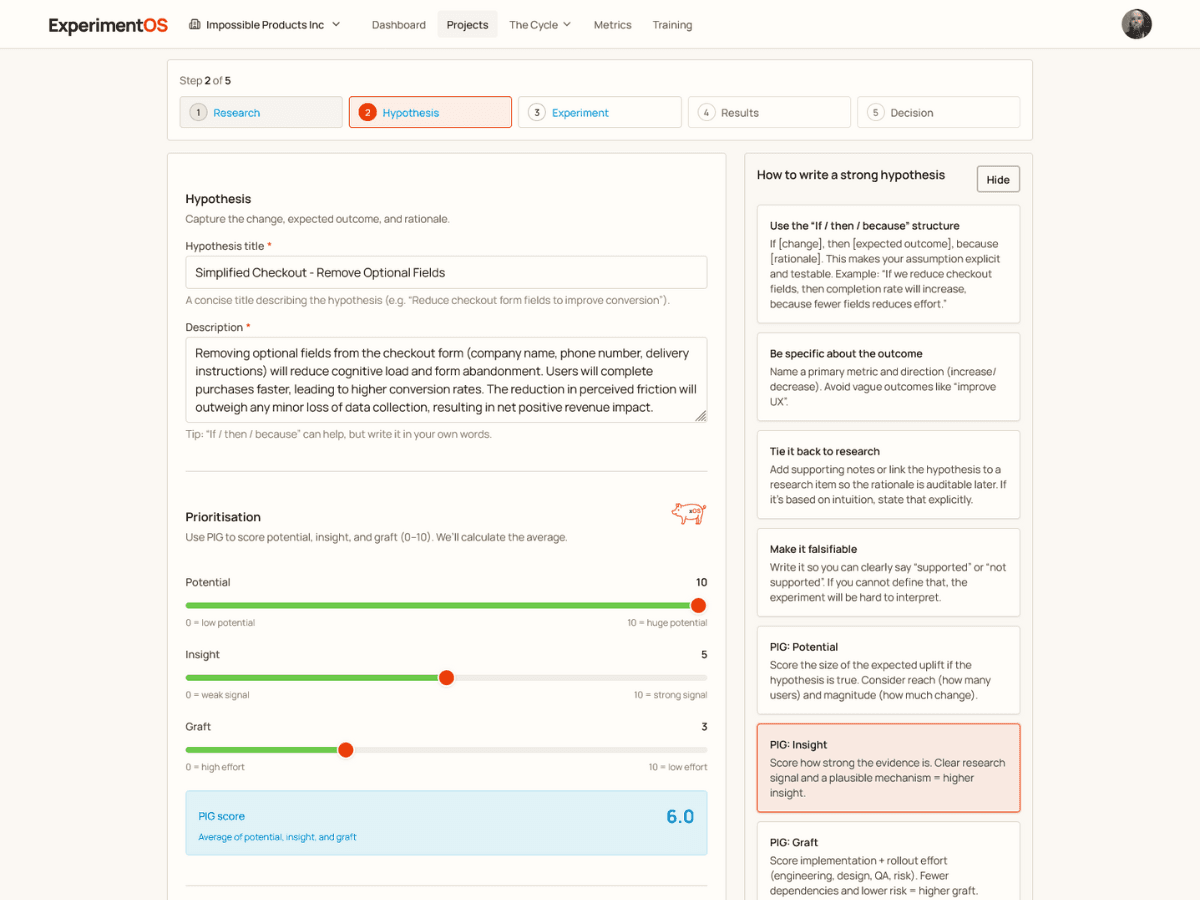
You know that spreadsheet with 200 test ideas? The one nobody's touched since Q2? We built something better. Structure your hypotheses properly, score them honestly, and track them from "good idea" through to "we actually tested it".
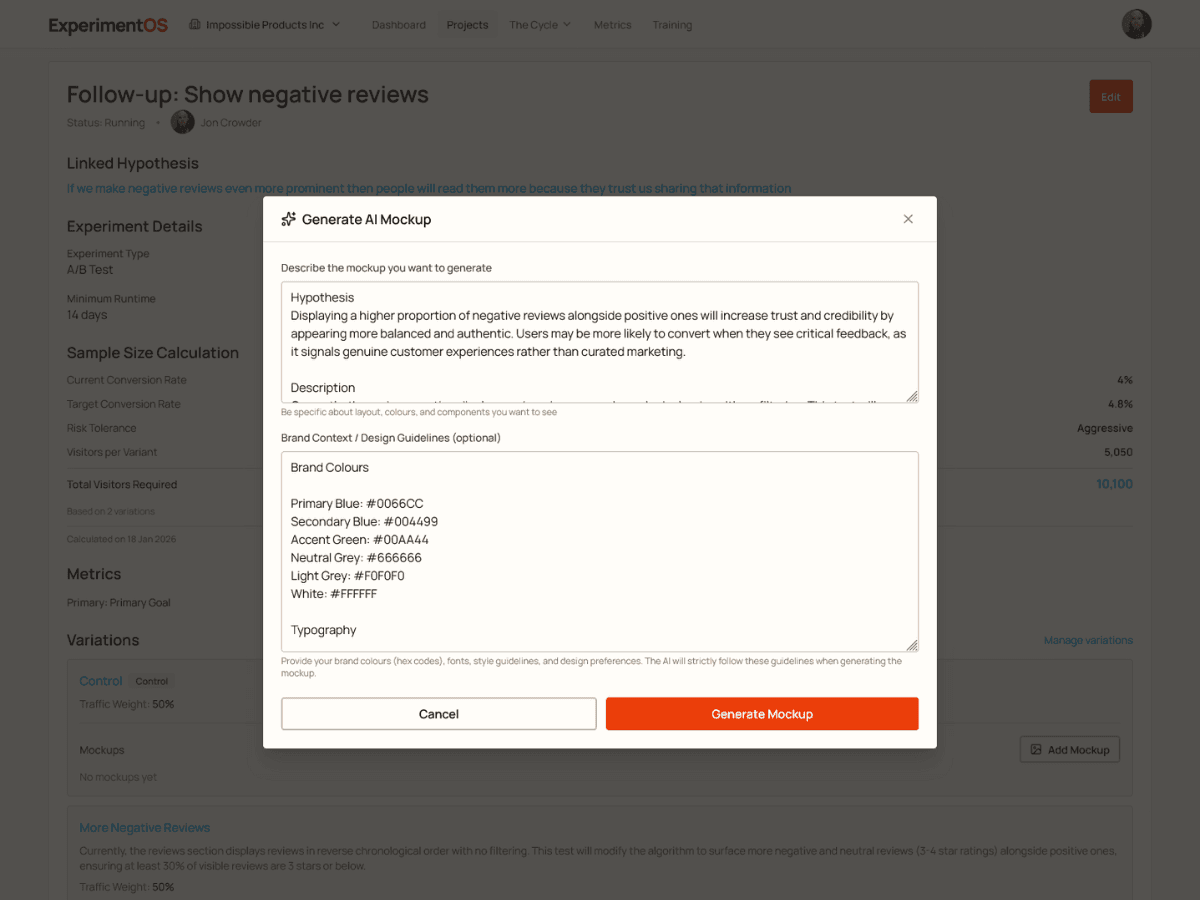
Getting from "we should test this" to "here's what it looks like" usually involves three meetings and a Figma request. Or you could just... generate it. Accessible, on-brand mockups from your hypotheses. AI does the grunt work, you do the thinking.
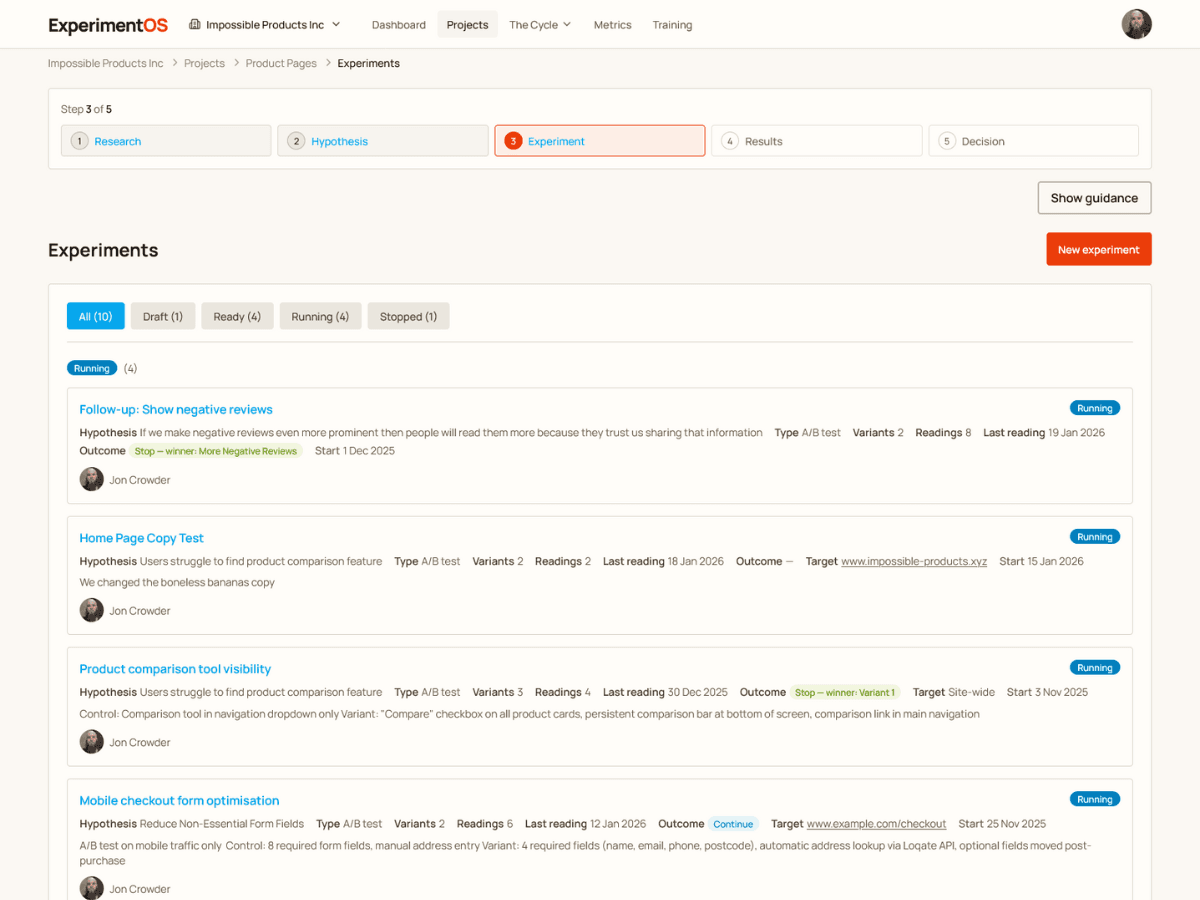
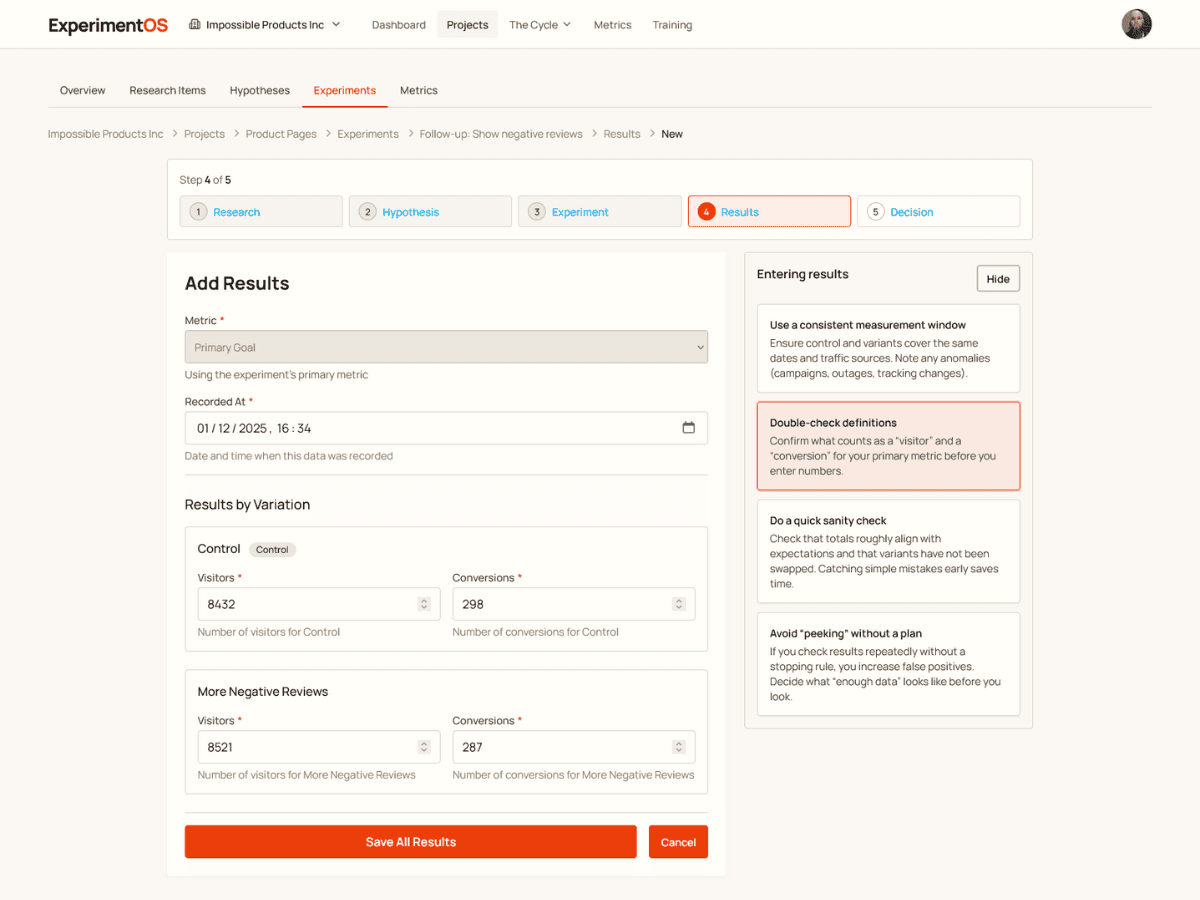
We're not trying to replace your testing platform. We're just giving you somewhere sensible to track what's running, what finished, and what the results actually mean. A/B, MVT, whatever - keep it all in one place.
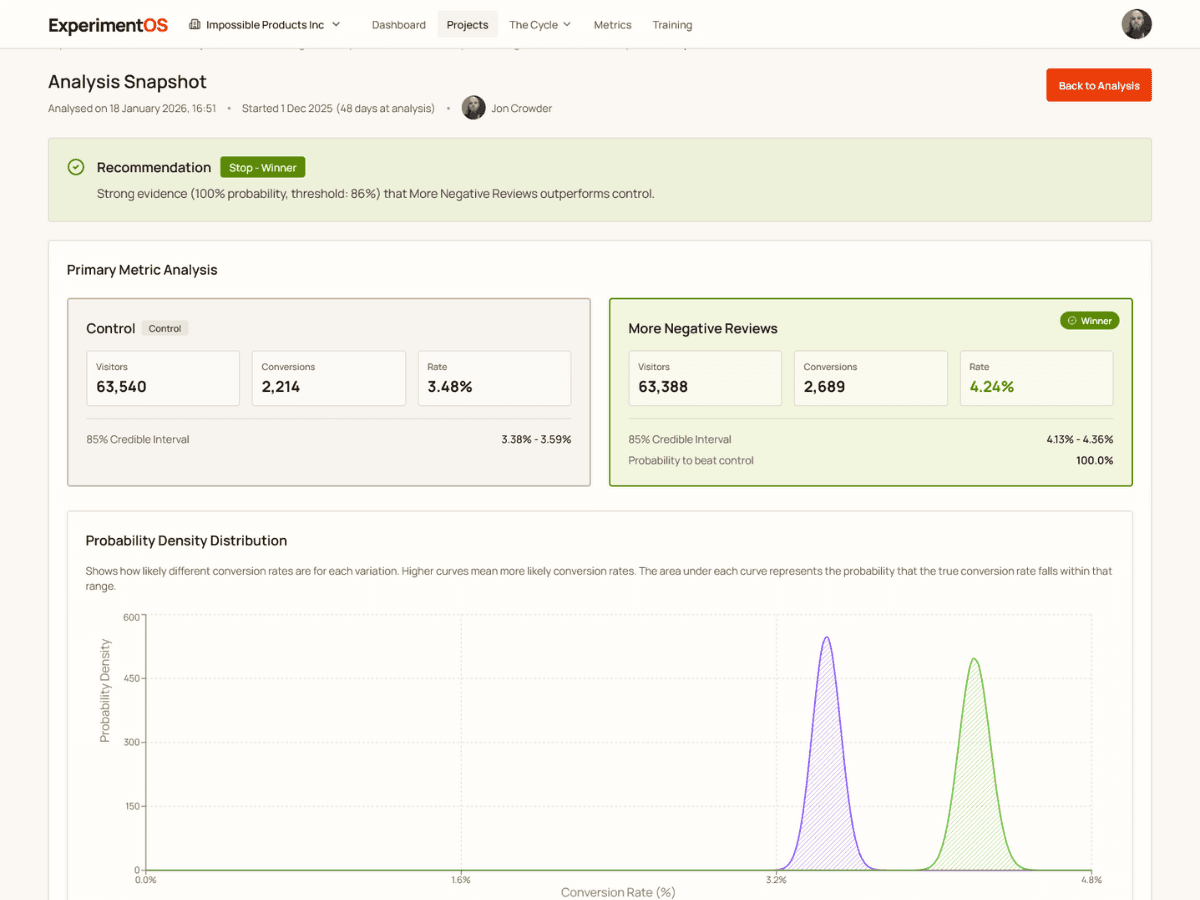
Most platforms show you a green arrow and confetti after three days. We don't, because that's how you ship losers and call them winners. Bayesian analysis with proper stopping rules. Probability to beat control, not meaningless p-values. Expected loss so you know what you're risking. We tell you when you have enough data. Not before.
The experiment finished. Now what? Most teams just... move on. Then six months later someone asks "didn't we test that?" and nobody knows. Capture what you decided, why, and what you learned. Future you will be grateful.
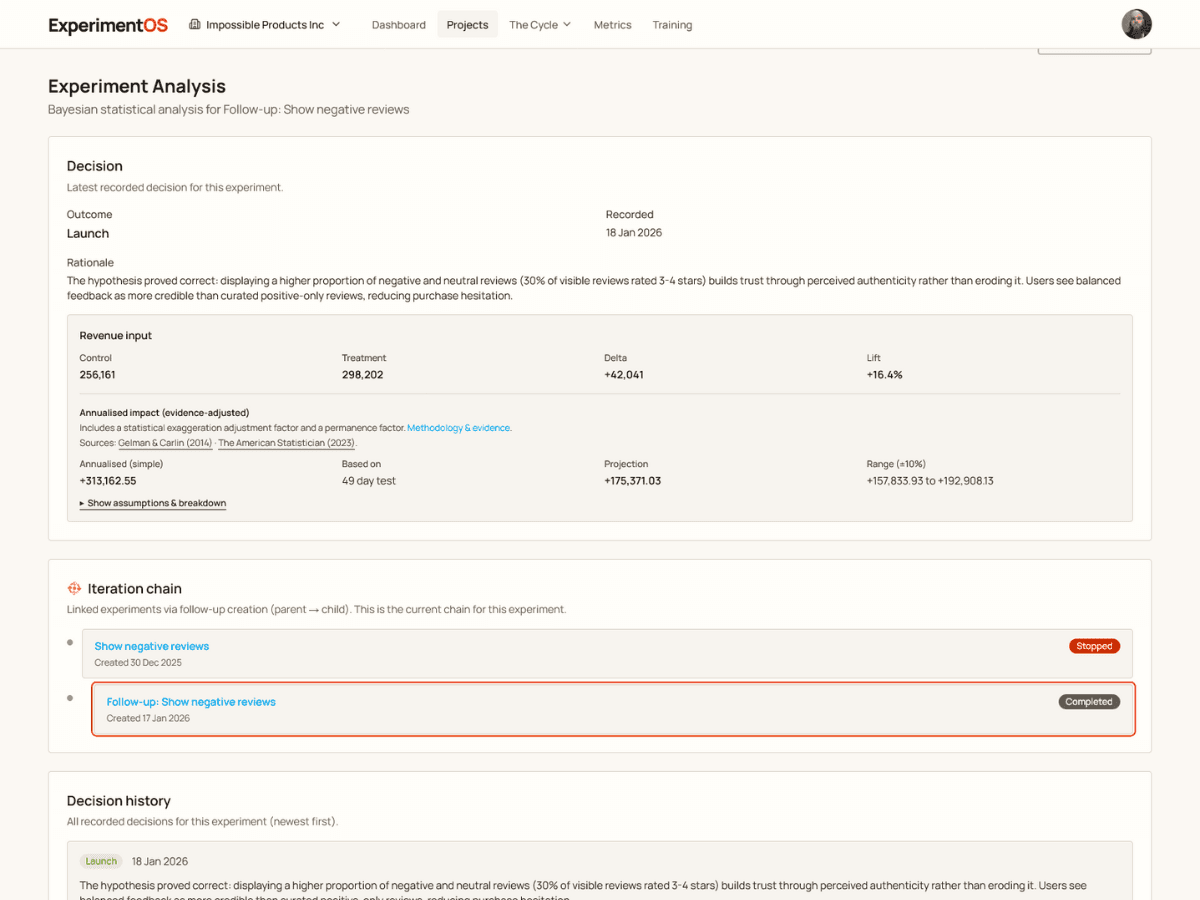
Ah, the classic CRO slide: "This test will make £2.4M annually." Really? Says who? We help you build defensible projections with conservative adjustments, transparent factors, and confidence ranges. Numbers you can actually present without crossing your fingers.
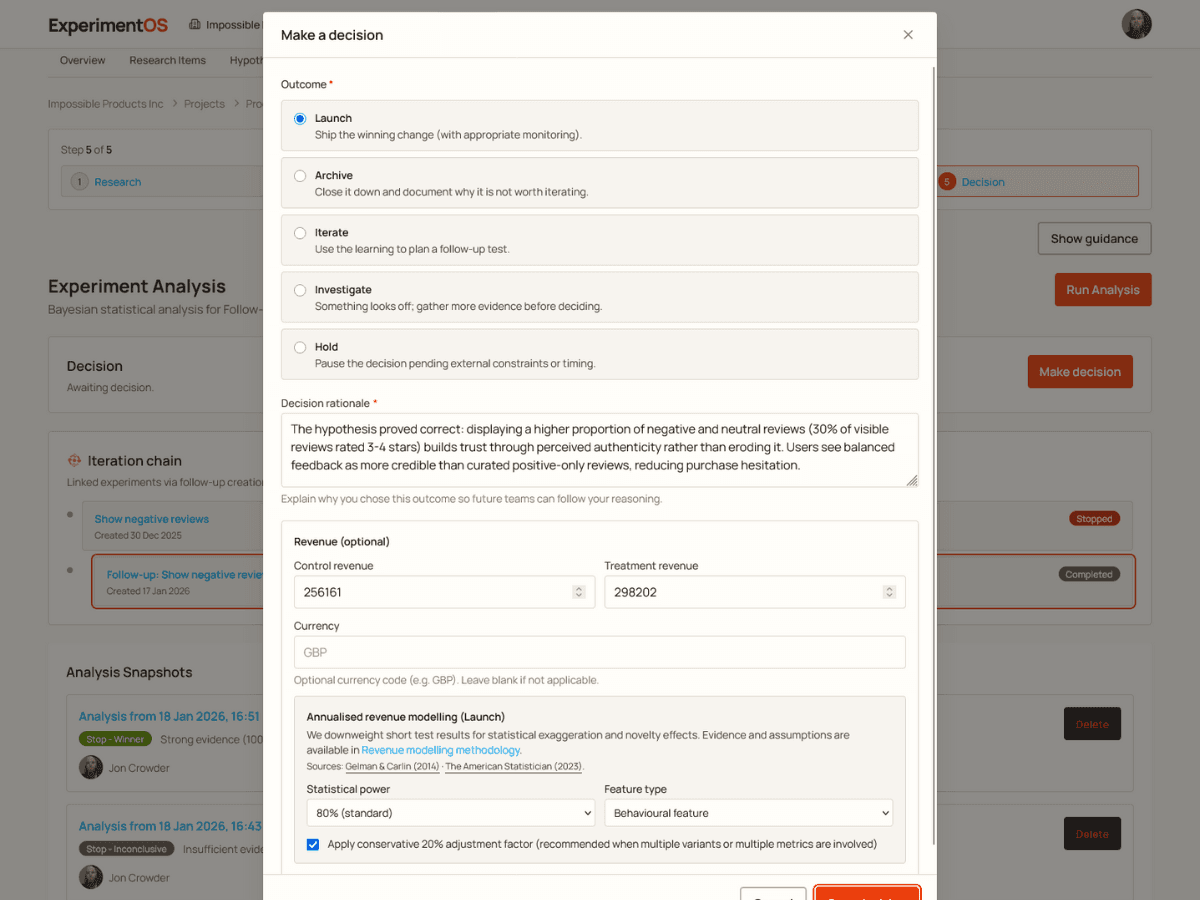
Good programmes iterate. Bad ones just run random tests and hope. The Iteration Chain links experiments together: what you tried, what you learned, what you did next. So when someone asks "why are we testing this?", you can show them the receipts.
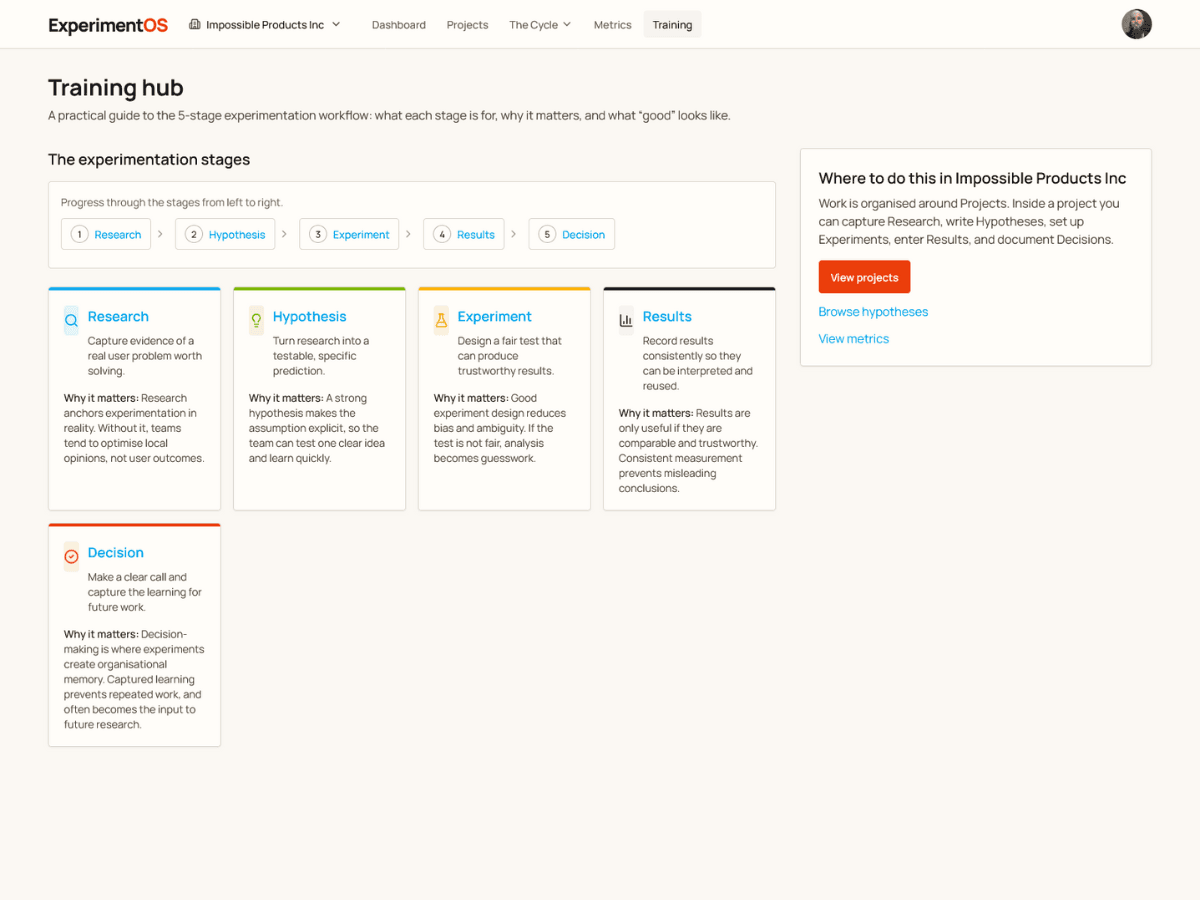
Not everyone on your team has run 500 experiments. That's fine - we built the good habits in. Stage-by-stage guidance, common pitfalls to avoid, and prompts that help junior team members learn without slowing everyone else down.
Invite your team. Give them the right access. Know who changed what. It's not complicated, but it's surprising how many tools make it complicated. We didn't.
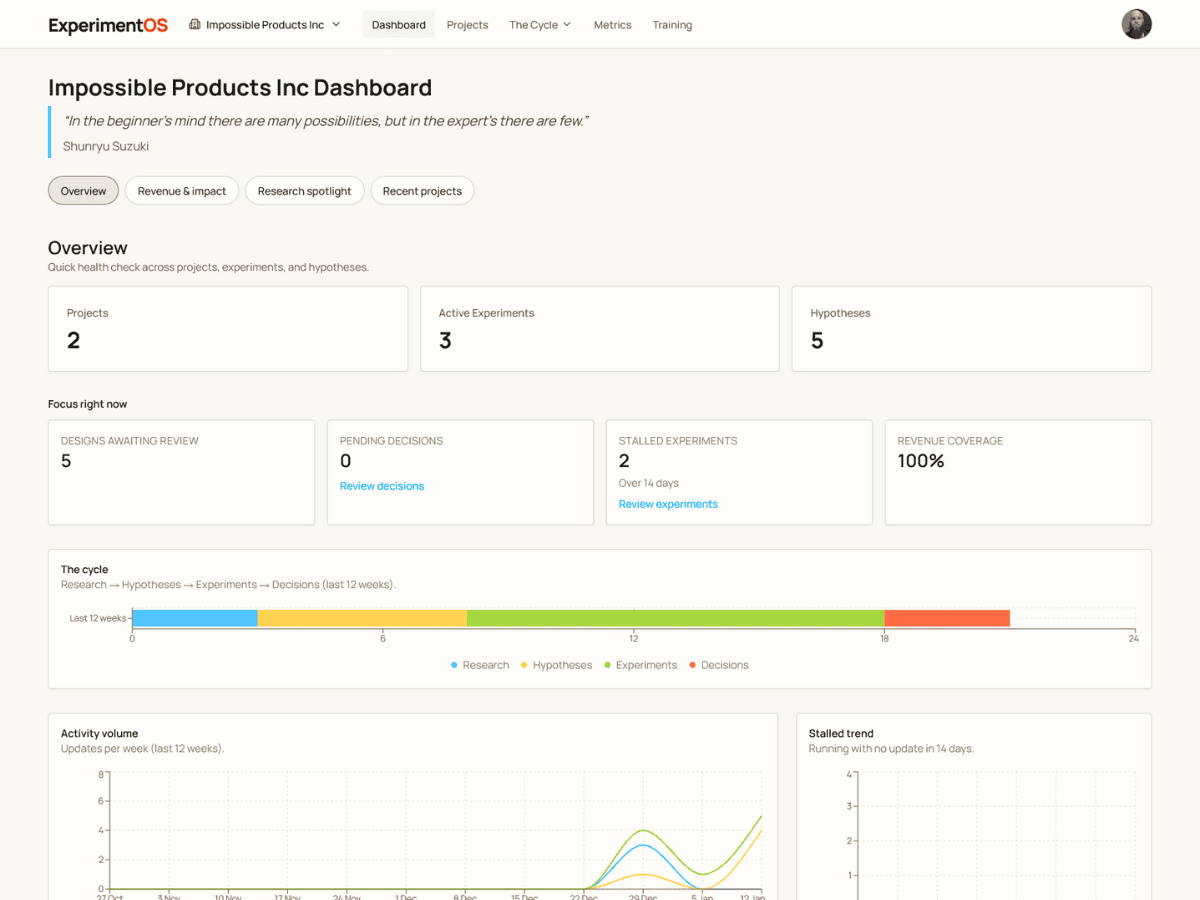
Keep your testing platform. Seriously, we don't care which one you use. We're not trying to replace it - we're just giving you a proper place to manage the programme around it.
GDPR compliant because it's the right thing to do, not because it's a marketing checkbox. We collect what we need, nothing more. Your data stays yours. We don't sell it, we don't mine it, we don't get weird about it.
| Feature | ExperimentOS | Airtable + Spreadsheets |
|---|---|---|
| Research to hypothesis linking | Included | Manual |
| Bayesian statistical analysis | Included | Build yourself |
| Platform integrations | Included | API work required |
| Knowledge retention | Included | Lost when people leave |
| Setup time | Minutes | Weeks |
You could keep using Airtable for tracking, spreadsheets for analysis, and hoping someone remembers what you learned last quarter. Or you could use a system that was actually designed for this.
Research feeds hypotheses. Hypotheses feed experiments. Experiments feed decisions. Decisions feed the next test. No broken links.
When Sarah leaves for that agency job, your programme doesn't leave with her. It's all in here.
Bayesian analysis with uncertainty shown. Tell stakeholders the truth, not a flattering fiction.
We don't care what testing platform you use. Just connect it and get on with your life.
All features included in the Standard plan at £59/month. No hidden tiers. See why we built this and how we use it at Another Web is Possible.
In-product snapshots
These are real screens, not concept mockups. Each one maps to a step in the experimentation cycle.
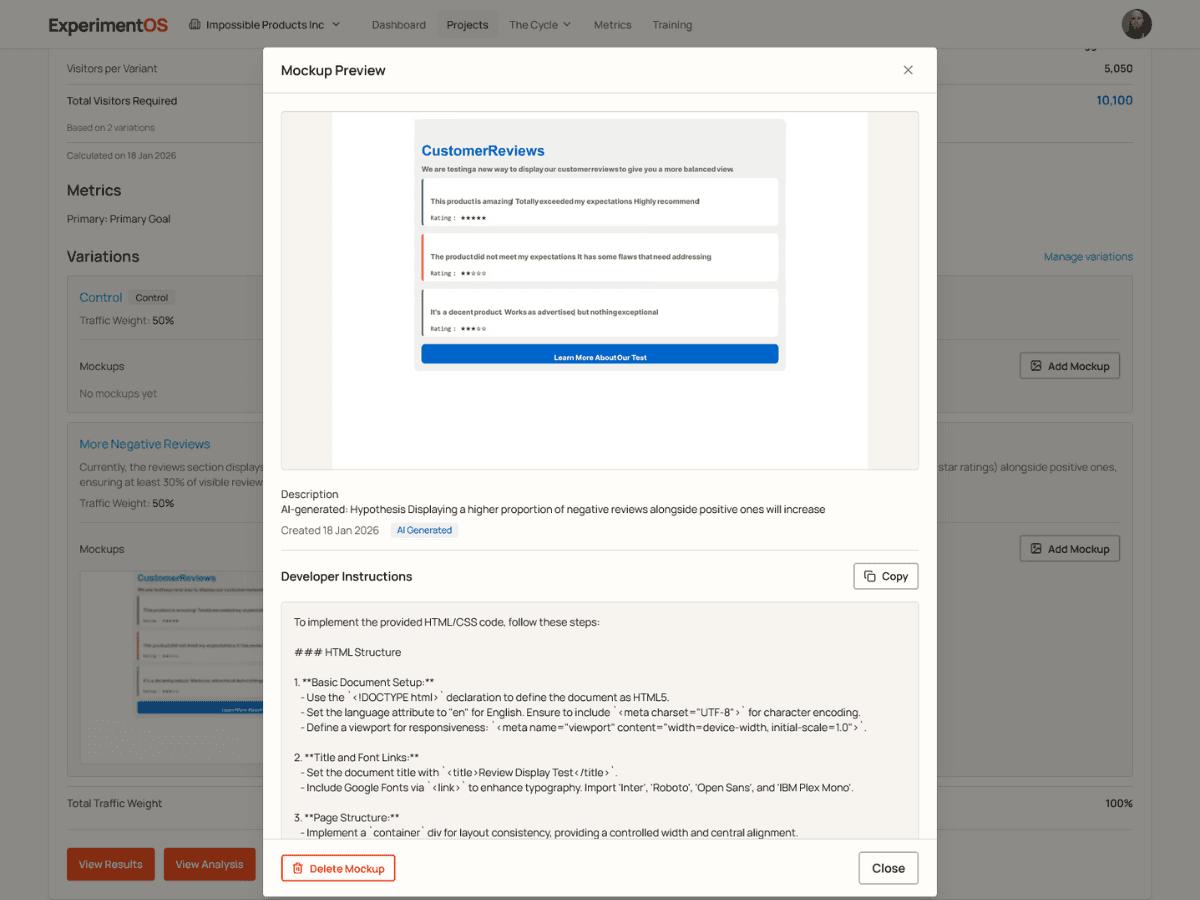
AI design prompts
Generate on-brand variations with clear brief instructions.
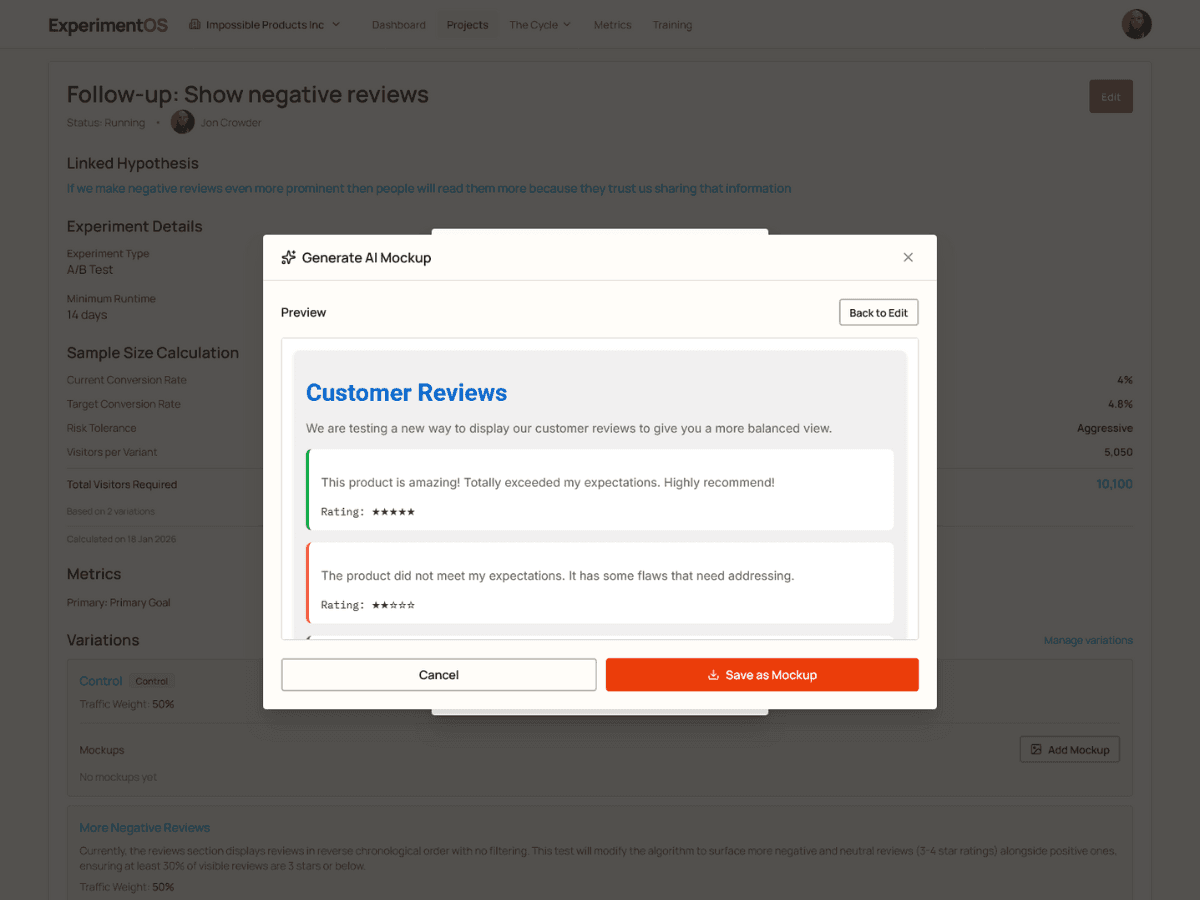
AI design variations
Multiple design directions ready for review.
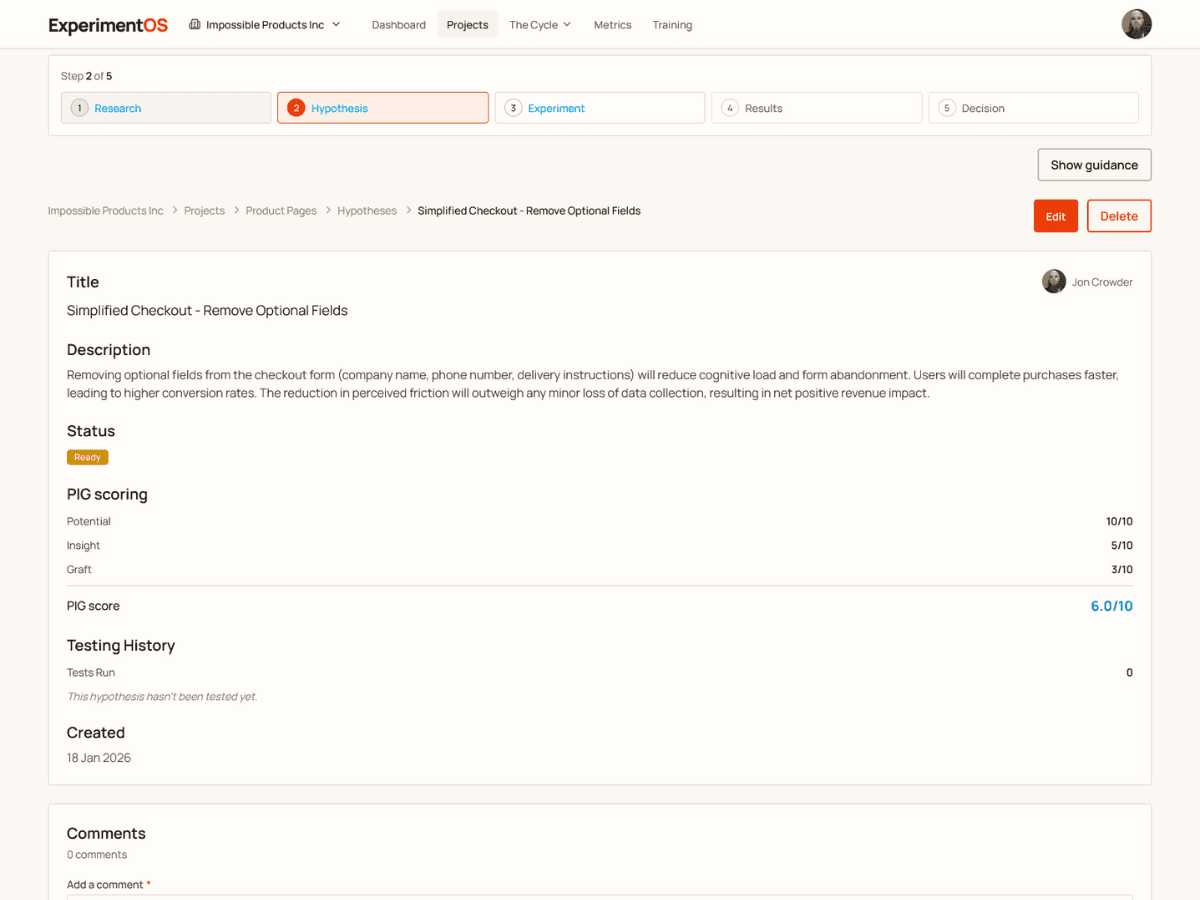
Hypothesis summaries
Concise rationale and scoring in one view.
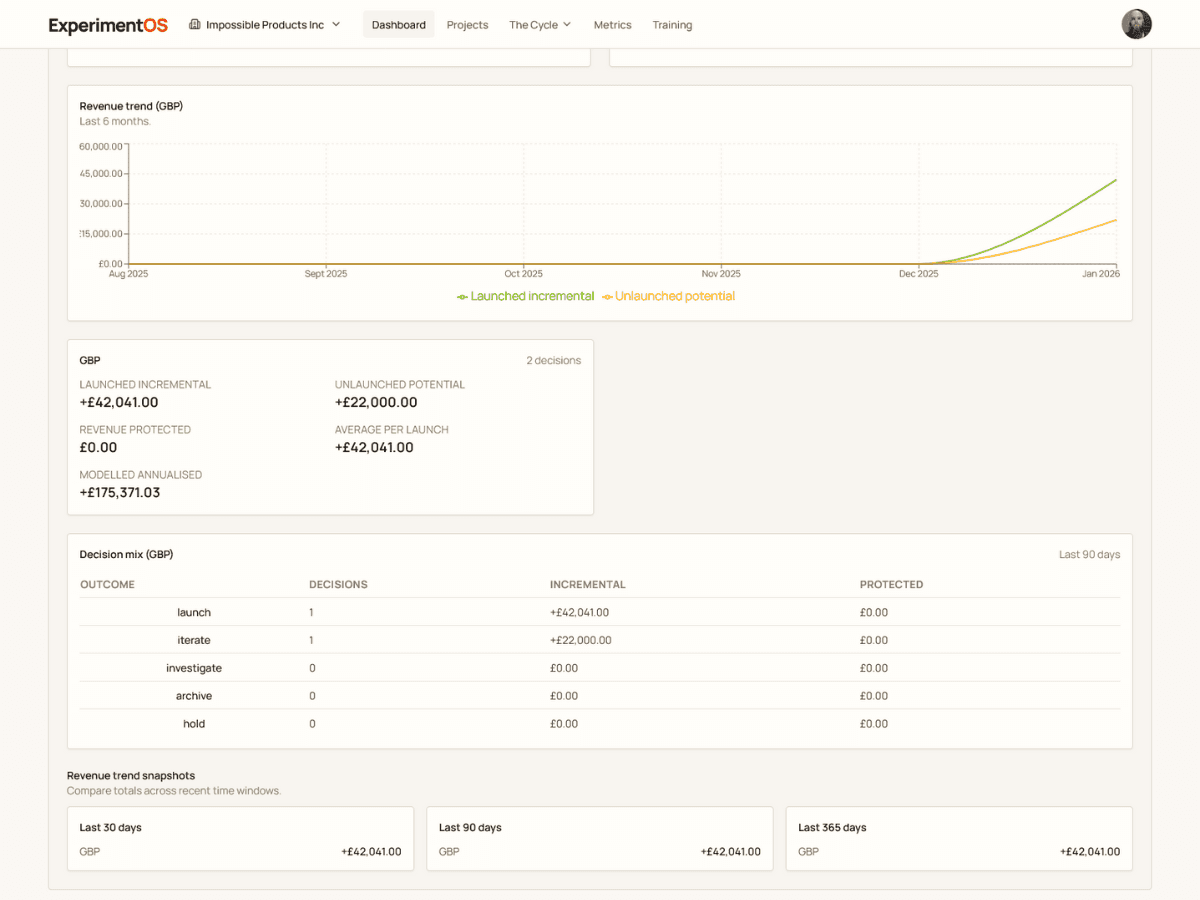
Revenue modelling overview
Evidence-led projections with conservative adjustments.
.png&w=3840&q=75)
Training guidance
Stage-by-stage coaching for better experimentation habits.
Straight answers. No buzzword soup.
£590/year for everything. £59/month if you prefer to commit slowly.
10% of what you pay goes to making the world slightly less rubbish.